
THE PUERTO RICAN MYTH
Pedro Albizu Campos: An evidence-based study of the man and his movement in the 1930s
In this work, I present the results of a thorough and unbiased examination of Pedro Albizu Campos and his movement, from the moment he took control of the Nationalist Party in 1930 until the summer of 1939, when the Nationalist Party became a thing of the past. This study examines how Albizu Campos transformed the Party into something the founders of the Nationalist Party would not recognize.
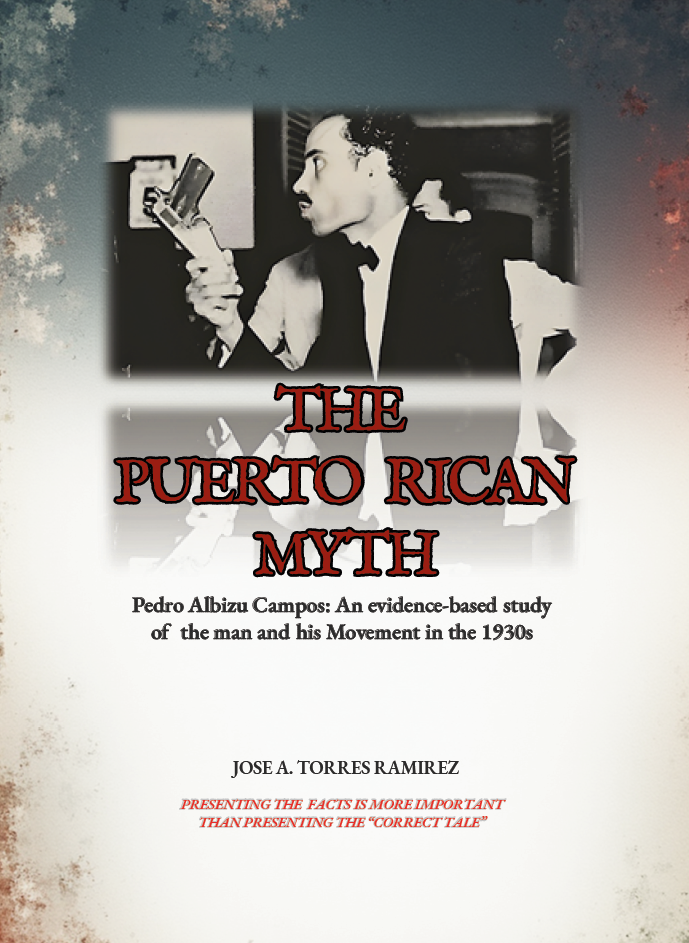
In this work, I present the results of a thorough and unbiased examination of Pedro Albizu Campos and his movement, from the moment he took control of the Nationalist Party in 1930 until the summer of 1939, when the Nationalist Party became a thing of the past. This study examines how Albizu Campos (Dubbed The Teacher by his followers) transformed the Party into something the founders of the Nationalist Party would not recognize.
My research shows that this image of The Teacher is mostly an illusion. The 1930s was a decade during which the Puerto Rican people experienced: 1) the rise of totalitarianism and intolerance within a Nationalist Party that followed only one voice; 2) the militarization of the Nationalist Party under Albizu Campos’s leadership as its commander-in-chief; 3) the creation of ceremonies and myths that promoted the cult of the immortal patriots who sacrificed their lives for the cause; and 4) the constant nationalist acts of bloodshed and violence against those labeled enemies of the Fatherland. These enemies included North Americans, pro-statehood Puerto Ricans, pro-independence Puerto Ricans who refused to follow Pedro Albizu Campos, and fellow nationalists who disagreed with or disobeyed Albizu Campos’s orders.